Chancellor Rachel Reeves’ Budget statement this afternoon announced tax increases for both individuals and businesses, projecting an overall tax hike of £40 billion. She expressed confidence that this strategy would foster growth in the near future.
Here are some of the key changes likely to have an effect on the property market.
Summary:
Stamp Duty Changes:
- From 31 October 2024, stamp duty for second homes and buy-to-let properties increases from 3% to 5%.
Inheritance Tax Updates:
- The threshold remains at £325,000 until 2030.
- Starting April 2027, pensions inherited will count toward the threshold.
Affordable Housing Commitment:
- Labour pledges to build 1.5 million homes; £5 billion allocated for housing initiatives.
Current Housing Market:
- Increased activity with sales up 29% and inquiries up 17%, but house price growth remains low.
Stamp Duty
Stamp Duty Land Tax (SDLT) applies to property or land purchases above a certain price in England and Northern Ireland.
It is payable when you buy a freehold, a new or existing leasehold, purchase with shared ownership, or acquire a mortgage or property share.
The SDLT amount varies based on the property’s cost, its intended use (residential or otherwise), and whether the buyer owns additional properties.
Key Stamp Duty Changes from the Autumn Budget
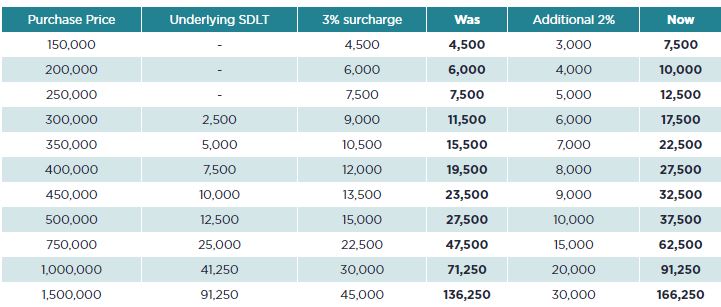
Starting Thursday 31st October 2024, stamp duty for second homes, buy-to-let properties, and corporate residential purchases in England and Northern Ireland will increase from 3% to 5%.
Analysts suggest this could reduce landlords’ interest in expanding portfolios, potentially tightening rental supply and driving up rents for tenants as a result.
What does these changes look like in practice?
Below you’ll find a chart that outlines the changes to Stamp Duty for investors and additional property buyers. This provides a clear view of how the recent adjustments will impact their tax liabilities.
Source: Savills.
Inheritance Tax
Inheritance tax is charged at 40% on the property, possessions and money of somebody who has died, above a £325,000 threshold.
It is only charged on the part of the estate that is above the threshold. For example, on an estate worth £335,000, the tax would apply to the additional £10,000.
The chancellor said this threshold will remain in place for an extra two years, until 2030.
Inheritance tax must be paid by the end of the sixth month after the person’s death, otherwise interest is charged too.
It currently raises about £7bn a year for the government.
Source: BBC
Key inheritance tax changes from the Autumn Budget
The inheritance threshold remains £325,000 until 2030. However, starting in April 2027, pensions passed on after death will count toward inheritance tax, affecting around 8% of estates. From April 2026, some family business and farm assets worth over £1 million will also be subject to inheritance tax.
Affordable Housing
Reeves reaffirmed Labour’s commitment to constructing 1.5 million homes during this parliamentary term.
Reeves has allocated £5 billion for housing initiatives next year, including a £500 million boost to the Affordable Homes Programme, which aims to deliver an additional 5,000 homes.
Furthermore, there will be £3 billion in support for small and medium enterprises and the Build to Rent sector through housing guarantee schemes.
Current Housing Market Snapshot
- The autumn housing market has seen increased activity compared to last year’s slower period.
- Sales agreements are up by 29%, and buyer inquiries have risen by 17%.
- The supply of homes for sale has also grown by 12%, giving buyers more options.
- Although there’s more movement, house price growth this month was lower than the usual seasonal increase, suggesting buyers remain price-sensitive.
- Sellers should focus on realistic pricing to secure deals in this competitive market.
- Source: Rightmove